BPH — Non-Neurogenic Male LUTS
On this page
- Type 2 5α-reductase is the predominant prostatic isoenzyme, localized mainly to stromal cells (interstitial fibroblasts), whereas type 1 is expressed chiefly in extraprostatic skin and liver.
- Finasteride 5 mg selectively blocks type 2 (70% serum DHT suppression) and dutasteride 0.5 mg blocks both isoenzymes (94%), yet prostate volume reduction at one year is similar.
- The α1A adrenoceptor predominates in the prostate, bladder neck and prostatic urethra, so its blockade relaxes smooth muscle and reduces the dynamic component of outlet obstruction.
- A highly selective α1A antagonist improves flow rate but not symptom scores, whereas α1D-blocking activity, as with tamsulosin, improves bladder-based storage symptoms.
- Cowper's glands lie within the external urethral sphincter in the deep perineal pouch, above the perineal membrane; only their 2–3 cm ducts pierce the membrane to open into the proximal bulbar urethra.
- Urinalysis (dipstick or microscopy) is mandatory before starting any LUTS treatment (EAU, Strong) because infection, microhematuria, glycosuria from diabetes or proteinuria redirect the workup away from benign prostatic obstruction.
Etiology & Basic Science
Embryological origin
- Wolffian ducts develop into the seminal vesicles, epididymis, vas deferens, ampulla, and ejaculatory duct — the developmental growth of this group of glands is stimulated by fetal testosterone, not DHT
- The prostate arises from the urogenital sinus, through DHT stimulation
- The central zone of the prostate arises from the Wolffian duct
- BPH inheritance — autosomal dominant
Cowper's (bulbourethral) glands
- Lie within the external urethral sphincter in the deep perineal pouch, above the perineal membrane
- Only their 2–3 cm ducts pierce the perineal membrane → open into the proximal bulbar urethra
Predictors of disease progression
- Age
- PSA — the strongest predictor
- Prostate size
- IPSS
- Flow rate
- PVR
- Age, symptom severity, Qmax, prostate volume and serum PSA → predict AUR and BPH-related surgery
- Gross hematuria → a complication of BPH, not a predictor of progression
LUTS — Classification
- Storage (irritative)
- Voiding (obstructive)
- Post-micturition
Differential — LUTS is a symptom complex, not a diagnosis
| Category | Causes |
|---|---|
| Prostatic | BPH |
| Bladder | OAB, nocturia, bladder tumor, neurogenic bladder |
| Outlet / urethra | Urethral stricture, foreign body |
| Upper tract | Distal ureteric stone |
| Inflammatory | UTI, CPPS |
Evaluation
Mandatory
- Medical history & physical exam — including DRE
- History mnemonic — FUN WISE, plus hematuria, hesitancy, dysuria
- Symptom score — IPSS
- Urinalysis
- Dipstick or microscopy — before starting any LUTS treatment (EAU, Strong)
- Voiding diary / frequency-volume chart
Optional
- PSA — if he is a candidate for prostate cancer screening
- PVR — if high → upper tract imaging
- Cytology — if severe irritative symptoms or dysuria
Before any intervention
- Uroflowmetry and ultrasound — mandatory
- Exam answer: before laser prostatectomy for refractory LUTS (history, DRE and symptom score already done) → urinalysis is the only routinely recommended test
- A PSA normal within the past year need not be repeated
- Exam answer: before laser prostatectomy for refractory LUTS (history, DRE and symptom score already done) → urinalysis is the only routinely recommended test
AUA 2021 splits this explicitly
| Recommended (3) | Optional (3) |
|---|---|
| History & physical exam | Post-void residual (PVR) |
| Urinalysis | Uroflowmetry |
| IPSS | Urodynamics |
- Urinalysis → focus on glucosuria, proteinuria, hematuria, infection
- Any of these (incl. microhematuria; glucosuria → diabetes) → redirect the workup away from benign prostatic obstruction
- Uroflowmetry → minimum interpretable voided volume 150 cc; don't Valsalva void
- Qmax < 10 mL/s for BOO → specificity 70%, PPV 70%, sensitivity 47%
- PVR → no accepted "significant" threshold — some guidelines take 150 mL, others 300 mL as elevated; follow the trend
- Correlation with degree of obstruction is weak; not a strong predictor of AUR
- Elevated PVR alone is NOT an indication for surgery
Prostate size
- DRE is unreliable for prostate size and cannot assess a middle lobe — image if size will drive the decision
- Prostate specific gravity 1.05 → g = mL = cc interchangeably; growth ~1.6%/yr — imaging within 12 months preferred
Indications for upper tract imaging
- UTI
- High creatinine
- Large PVR
- Urolithiasis
- Hematuria
IPSS — Scoring
| Score | Severity |
|---|---|
| 0–7 | Mild |
| 8–19 | Moderate |
| 20–35 | Severe |
The 7 domains
- Frequency
- Urgency
- Nocturia
- Weak stream
- Intermittency
- Straining
- Incomplete emptying
Cystoscopy — Indications
- Suspicious CIS
- Hematuria
- Query or history of stricture
- History of TURP
- Prior to surgical intervention
- LUTS persisting despite tamsulosin → assess prostate size and configuration (e.g. a median lobe) by cystoscopy or TRUS before discussing surgery such as prostatic urethral lift (UroLift) or TURP
Urodynamics — Indications & Formulae
- Invasive urodynamics (pressure-flow) = gold standard for bladder outlet obstruction — the diagnosis rests on urodynamics, not uroflowmetry, TRUS, cystoscopy or cystourethrogram
- Pressure-flow is not routine before prostate surgery (costly, invasive) — reserve for diagnostic doubt / uncertainty in male LUTS
- E.g. younger men with small prostates and severe LUTS, or suspected neurogenic detrusor dysfunction
- UPSTREAM: routine urodynamics in uncomplicated LUTS did not significantly reduce surgery rates and was non-inferior for IPSS → use selectively
- Before BPH surgery, cystoscopy and uroflowmetry are optional (cystoscopy when prostate size or configuration is in doubt, e.g. too large for endoscopic surgery or a median lobe)
- If no clear suggestion of obstruction (Qmax > 10)
- EAU: surgery considered + bothersome, predominantly voiding LUTS + a valid Qmax > 10 mL/s (voided volume > 150 mL) → pressure-flow study (weak recommendation)
- If Qmax < 10 mL/s → obstruction likely; pressure-flow not necessarily needed
A pressure-flow study is suggested before invasive treatment in:
- Patients with previously unsuccessful invasive procedures
- Patients who cannot void more than 150 mL
- Patients with a PVR > 300 mL
- An elevated PVR alone should not justify outlet surgery — detrusor underactivity mimics obstruction
- Pressure-flow separates them: obstruction = high pressure + low flow · underactivity = low pressure + low flow
- Patients older than 80 with predominantly voiding LUTS
- Patients younger than 50 with predominantly voiding LUTS
BOOI — Bladder Outlet Obstruction Index
BOOI = Pdet@Qmax − 2(Qmax)
| BOOI | Interpretation |
|---|---|
| > 40 | Obstructed |
| 20–40 | Equivocal |
| < 20 | Unobstructed |
BCI — Bladder Contractility Index
BCI = Pdet@Qmax + 5(Qmax)
| BCI | Interpretation |
|---|---|
| > 150 | Strong |
| 100–150 | Normal |
| < 100 | Weak / acontractile |
- Detrusor underactivity alone (BCI < 100) with BOOI < 40 → significantly worse 12-month Qmax after surgery — counsel carefully before TURP
- Diabetics — typical urodynamics: impaired bladder sensation · increased cystometric capacity · decreased contractility · impaired uroflow · later, increased residual urine — though some suggest detrusor overactivity is the predominant pattern
Management Algorithm
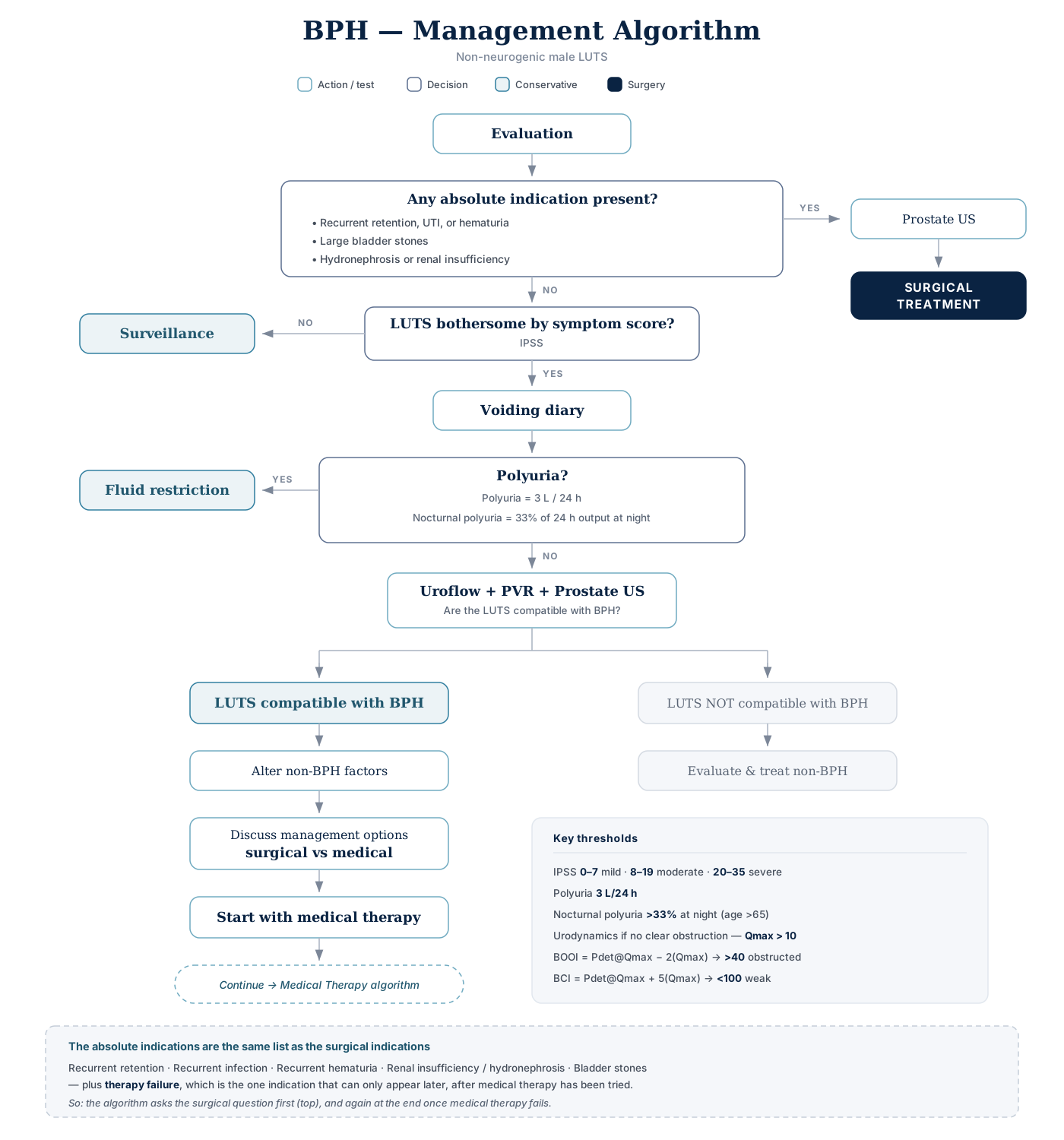
Click the algorithm to open it full size.
| Step | Question / Action | If YES | If NO |
|---|---|---|---|
| 1 | Absolute indication? — recurrent retention/UTI/hematuria · large bladder stones · hydronephrosis or renal insufficiency | Prostate US → SURGICAL TREATMENT | → Step 2 |
| 2 | LUTS bothersome by symptom score? (IPSS) | → Step 3 | Surveillance |
| 3 | Voiding diary → polyuria? — polyuria 3 L/24 h; nocturnal polyuria 33% of 24 h output at night | Fluid restriction | → Step 4 |
| 4 | Uroflow + PVR + prostate US → LUTS compatible with BPH? | Alter non-BPH factors → discuss surgical vs medical → start medical therapy (see Medical Therapy) | Evaluate & treat non-BPH |
Complicated LUTS → straight to specialized management
- Suspicious DRE
- Hematuria
- Abnormal PSA
- Pain
- Infection (assess and start treatment before referral)
- Palpable bladder
- Neurologic disease
Two caveats on the recommended tests
- Serum PSA is part of the recommended workup when life expectancy is > 10 years and if a diagnosis of prostate cancer would modify management
- A frequency-volume chart is recommended when significant nocturia is a predominant symptom
Note the loop: the absolute indications at step 1 are the same list as the surgical indications (see Surgical Management — Indications) — minus therapy failure, which can only appear later.
The algorithm asks the surgical question at the top, and again at the end of medical therapy once medical therapy fails.
Medical Therapy — Choice by Predominant Symptom
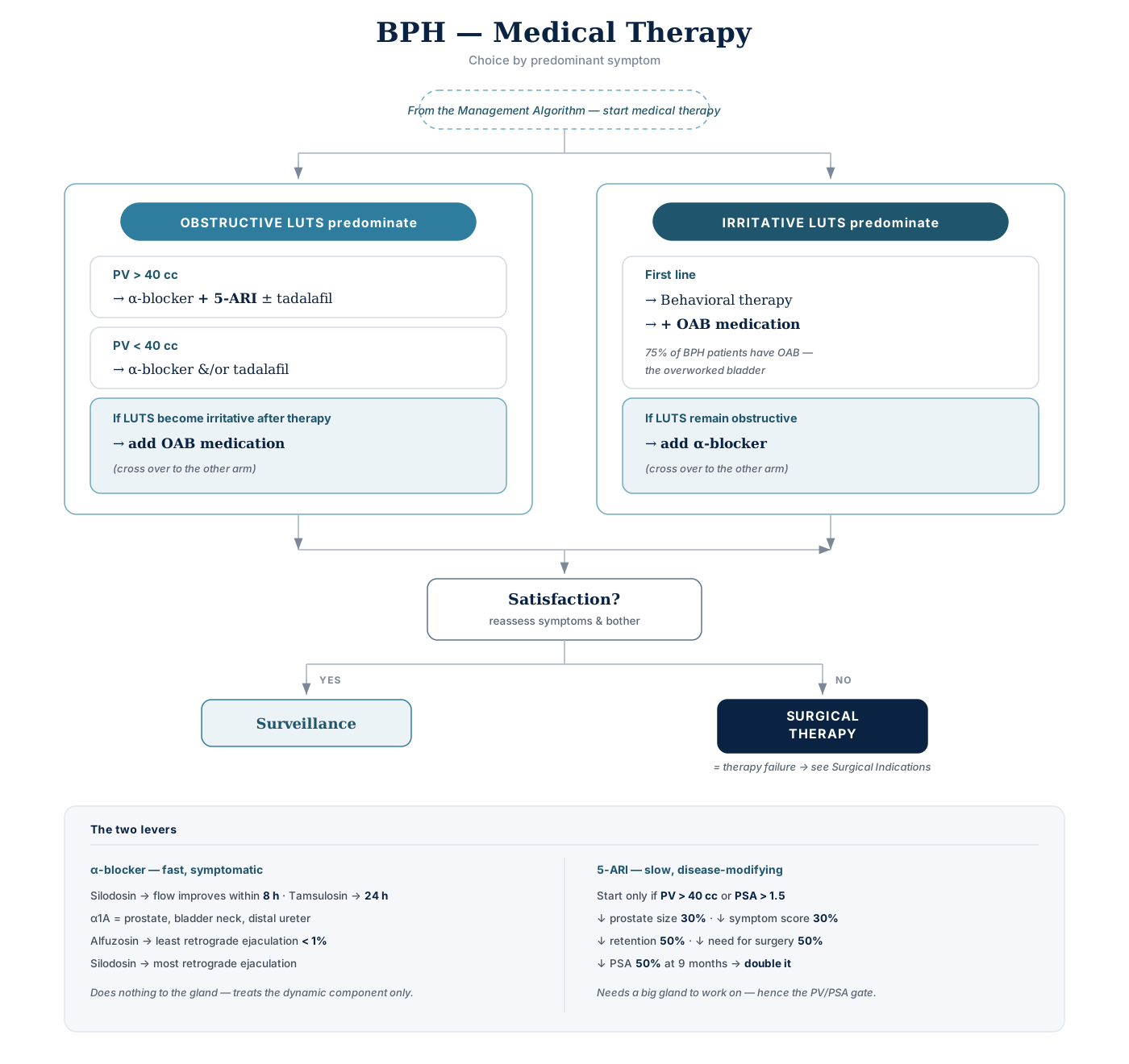
Click the algorithm to open it full size.
| Predominant symptom | First line | If it crosses over |
|---|---|---|
| Obstructive, PV > 40 | α-blocker + 5-ARI ± tadalafil | If LUTS become irritative after therapy → add OAB medication. Antimuscarinics are not primary therapy for obstructive symptoms with a raised PVR. |
| Obstructive, PV < 40 | α-blocker &/or tadalafil. No 5-ARI without prostate enlargement — finasteride is not appropriate for a small 30 g gland, and α-blocker + 5-ARI combination is not justified; e.g. IPSS 25, bother 5, 25 g → α-blocker monotherapy. | (as above) |
| Irritative | Behavioral therapy + OAB medication | If LUTS remain obstructive → add α-blocker |
→ Then reassess: Satisfaction?
- YES → Surveillance
- NO → Surgical therapy (= therapy failure — see Surgical Management — Indications and Surgical Choice)
Watchful Waiting & Lifestyle
- Offer to men with mild/moderate symptoms who are minimally bothered — bother-based, not score-based
- High score and high bother (e.g. IPSS 25, bother 5) → watchful waiting inappropriate — offer intervention
- Offer lifestyle advice & self-care prior to, or concurrent with, treatment
- Efficacy: ~85% with mild LUTS stable at 1 year; 5-year failure 21% (79% clinically stable)
- Follow-up: 6 months, then annually — history, bladder diary, IPSS, uroflowmetry, PVR
Components of watchful waiting & self-management
Education and reassurance
- Discuss the causes of LUTS, including normal prostate and bladder function
- Discuss the natural history of BPH and LUTS, including the expected future symptoms
- Reassure the patient that no evidence of detectable cancer has been found
Fluid management
- Advise a daily fluid intake of 1500–2000 mL (minor adjustments for climate and activity)
- Avoid inadequate or excessive fluid intake — judge on the frequency-volume chart
- Advise fluid restriction when symptoms are most inconvenient (long journeys, out in public)
- Advise evening fluid restriction for nocturia — no fluid for 2 hours before retiring
Caffeine and alcohol
- Replace caffeine with decaffeinated or caffeine-free alternatives
- Avoid alcohol in the evening if nocturia is bothersome
- Replace large-volume alcoholic drinks (a pint of beer) with small-volume ones (wine or spirits)
Concurrent medication
- Adjust the timing of any medication affecting the urinary system to reduce LUTS at times of greatest inconvenience
- Replace antihypertensive diuretics with suitable alternatives with fewer urinary effects — via the patient's GP
Toilet and bladder retraining
- Double voiding — spend extra time on the toilet to try to empty completely
- Urethral milking for post-micturition dribbling
- Bladder retraining with distraction techniques (a predetermined mind exercise, perineal pressure, pelvic floor exercises)
- Aim to increase the minimum time between voids to 3 hours (daytime) and/or the minimum voided volume to 200–400 mL (daytime)
- Suppress the urge to void for 1 minute, then 5, then 10 — increasing on a weekly basis
- Use frequency-volume charts to monitor progress
Miscellaneous
- Avoid constipation in men with LUTS
- Control diabetes
Medical Management
α-Blockers
| Drug | Class | Receptor | Key effect |
|---|---|---|---|
| Tamsulosin | Uroselective | α1A + α1D | Retrograde ejaculation |
| Alfuzosin | Uroselective | — | Least ejaculatory dysfunction |
| Silodosin | Uroselective | α1A | Most retrograde ejaculation |
| Naftopidil | Uroselective | α1D | — |
| Terazosin | Selective | α1 | Hypotension — titration necessary |
| Doxazosin | Selective | α1 | Most hypotension — titration necessary |
| Phenoxybenzamine | Non-selective | α1 + α2 | (not used in modern BPH practice — the classification anchor) |
Receptors
- α1 + α2 blockade → phenoxybenzamine and phentolamine; prazosin, terazosin, doxazosin, alfuzosin and tamsulosin are all α1-selective
- α1A receptors found in → prostate, bladder neck, distal ureter
- Predominant subtype in prostatic stroma, bladder neck and prostatic urethra → mediates smooth muscle tone → blockade relaxes it → ↓ dynamic component of outlet obstruction
- A highly selective α1A antagonist improves flow rate but not symptom scores
- α1D blockade (as with tamsulosin) → improves bladder-based storage symptoms
- α1B → vascular smooth muscle → blockade causes dizziness and orthostatic hypotension
- Tamsulosin, silodosin and naftopidil → higher affinity for α1A/α1D than α1B
Ejaculatory dysfunction
- Uroselective agents cause more ejaculatory dysfunction — this does not apply to alfuzosin
- Alfuzosin → least retrograde ejaculation — < 1%
Improvement in urinary flow
- Silodosin → improvement in urinary flow within 8 h
- Tamsulosin → improvement within 24 h
- Exam answer: flow parameters change within only a few hours; symptom relief after about 1 week
Effectiveness
- The five standard agents (alfuzosin, doxazosin, silodosin, tamsulosin, terazosin) are equally effective — IPSS improvement 4–7 points vs placebo
- Switch α-blocker for side effects → worthwhile
- Switch for insufficient response → not recommended — drug type doesn't change effectiveness
Choosing by side-effect profile
| Concern | Prefer |
|---|---|
| Ejaculatory dysfunction | Alfuzosin, doxazosin, terazosin (no difference vs placebo) — avoid silodosin/tamsulosin in young sexually active men |
| Orthostatic hypotension / syncope | Alfuzosin, tamsulosin, silodosin |
| On sildenafil/vardenafil | Avoid terazosin & doxazosin (potentiate hypotension); tamsulosin 0.4 mg does not |
- Bothersome LUTS + worried about ejaculation → alfuzosin — α-blockers are first-line regardless of prostate size
Side-effect superlatives
- Most common class side effect → dizziness (2–10%)
- Five most common → dizziness, orthostatic hypotension, headache, nasal congestion, retrograde ejaculation
- Least painful ejaculation → alfuzosin
- Most dizziness → terazosin and doxazosin (both long-acting, both need titration)
- Most retrograde ejaculation → silodosin, then tamsulosin
- Ejaculatory risk rises with α1A selectivity → silodosin (OR 32.5) > tamsulosin (OR 8.57) > alfuzosin
- Most hypotension → doxazosin
Starting an α-blocker
- Monitor blood pressure closely in the first week of treatment
- Ask whether the patient is already taking an α-blocker for hypertension — if so, don't add a second one
- Warn every patient about first-dose hypotension — any α-blocker (silodosin, tamsulosin, alfuzosin, terazosin), even uroselective agents with their lower vascular risk
- Non-uroselective agents (e.g., terazosin) → titrate the dose over the first few weeks — high first-dose hypotension risk
- An orthostatic BP drop without postural symptoms is not a contraindication to an α-blocker
Tamsulosin (Omnic) — full side-effect profile
- Blocks α1A and α1D
- Postural hypotension, dizziness, retrograde ejaculation, priapism, rhinitis, palpitations, syncope, intraoperative floppy iris syndrome
- Most common side effect → abnormal ejaculation — strongly dose-dependent: 6% at 0.4 mg vs 18% at 0.8 mg
- Adverse events and withdrawals rise with dose → 0.4 mg is the formulation of choice for LUTS
- vs terazosin/doxazosin → retrograde ejaculation and rhinitis commoner with tamsulosin; dizziness and asthenia commoner with terazosin/doxazosin
IFIS — Intraoperative Floppy Iris Syndrome
- Tamsulosin has the highest risk — 40× alfuzosin; all α-blockers raise it somewhat
- Incidence 30–88% on tamsulosin — α1A blockade of the iris dilator → iris billowing, prolapse toward the incisions, progressive miosis
- Ask about planned cataract surgery before starting; delay initiation until after
- Stop tamsulosin 4–7 days pre-op is routine — doesn't fully eliminate the risk
- Exam answer: stopping before cataract surgery does not significantly reduce the risk — IFIS can occur years after discontinuation → ask about current or previous α-blocker use
- Already on tamsulosin + cataract surgery → inform the ophthalmologist so the surgeon can anticipate IFIS and modify technique
- 1 serious complication per 255 men on tamsulosin in the immediate pre-op window
AUR
- α-blocker for AUR → prescribe before a voiding trial; at least 3 days of therapy first
- A successful trial still leaves them at increased risk of recurrent retention
- Delay the voiding trial if there's an active UTI
5α-Reductase Inhibitors (5-ARI)
| Drug | Inhibits |
|---|---|
| Finasteride | Type 2 |
| Dutasteride | Type 1 + 2 |
- Type 2 → predominant prostatic isoenzyme, localized mainly to stromal cells (interstitial fibroblasts)
- Type 1 → chiefly extraprostatic — skin and liver
- Finasteride 5 mg (type 2 only) → serum DHT ↓ 70%; dutasteride 0.5 mg (both) → serum DHT ↓ 94%
- Yet prostate volume reduction at 1 year is similar
Indications to start a 5-ARI:
- Prostate volume > 40 cc
- PSA > 1.5
Effects:
- Reduce prostate size by 30%
- Exam answer: 15–30% volume reduction after 6–24 months of treatment
- Improve symptom score by 30%
- Reduce risk of urinary retention by 50%
- Reduce need for surgical intervention by 50%
- Decrease PSA by 50% after 9 months → double the PSA for the actual result
- Applies to finasteride 1 mg or 5 mg — e.g., 1.8 → 3.6 ng/mL; adjusted PSA > 3 ng/mL → multiparametric MRI or a biomarker
- ConfirmMDx → tissue-based biomarker, indicated only after a previously negative biopsy; standard biopsy sampling = 12 or more cores
- Applies to finasteride 1 mg or 5 mg — e.g., 1.8 → 3.6 ng/mL; adjusted PSA > 3 ng/mL → multiparametric MRI or a biomarker
- Help stop chronic hematuria related to the prostate (consider a 5-ARI to reduce intra-operative bleeding / transfusion before TURP)
- Increase Qmax — only ~2 mL/s
- Decrease serum and prostatic DHT
- Also ↓ semen volume, with variable falls in sperm concentration and motility
- Infertile man on tamsulosin + finasteride with low semen volume and poor sperm parameters → stop both — ejaculatory and semen effects are reversible
- Pseudoephedrine or imipramine → only for retrograde ejaculation that persists after the drugs are stopped
Finasteride
- For prostate > 40 cc + moderate-to-severe symptoms
- Side effects — low libido, ejaculatory problems, depression, ED 5%
- Long-term data show a 51% reduction in the risk of either AUR or surgery
Dutasteride
- For prostate > 40 cc + moderate-to-severe symptoms
- ED 6%, low libido 3.7%, depression, ejaculatory dysfunction
PDE5 — Tadalafil
- Tadalafil 5 mg daily — discuss for LUTS/BPH irrespective of comorbid ED
- Mechanism → ↑ nitric oxide signaling → relaxes prostate and bladder neck smooth muscle
- Mean IPSS drop 1.7 points; similar to tamsulosin 0.4 mg at 3 months
- Does NOT improve urodynamic profiles
- AEs: headache, nasopharyngitis, back pain
Phytotherapy
- Serenoa repens (saw palmetto) is the most widely investigated phytotherapeutic agent for LUTS
- Recommended dose — 320 mg daily, taken with food
Combination Therapy
| Combination | When |
|---|---|
| α-blocker + 5-ARI | Only with demonstrable enlargement — PV >40 cc / PSA >1.5 |
| α-blocker + anticholinergic | Moderate–severe storage-predominant LUTS — check PVR before and during |
| α-blocker + β₃-agonist | Moderate–severe storage LUTS, esp. older patients where anticholinergics are inappropriate |
- α-blocker + PDE5 inhibitor — possible, but not preferable
- Adding tadalafil to an α-blocker does not improve storage LUTS
Antimuscarinics
- For moderate-to-severe irritative LUTS, with no history of AUR and PVR < 200 cc
- Contraindications: closed-angle glaucoma, bladder outlet obstruction
- Anticholinergics may be safely given in bladder outlet obstruction to reduce frequent voiding provided PVR is < 200 mL and the patient does not report increasing hesitancy or show a rising PVR on therapy
- Bothersome storage LUTS persisting on tamsulosin + small prostate + low PVR → treat as OAB → add an antimuscarinic (solifenacin)
- Antimuscarinic over mirabegron here — mirabegron is relatively contraindicated in uncontrolled hypertension
- Not finasteride (larger prostates only) and not a higher tamsulosin dose (targets voiding, not storage LUTS)
Mirabegron
- For moderate-to-severe irritative LUTS
- May be preferred in older men with prevalent storage symptoms — more favorable tolerability than antimuscarinics
- Side effect — hypertension
- Combination beats dose escalation.
- Adding mirabegron 50 mg to solifenacin 5 mg is superior to escalating solifenacin from 5 mg to 10 mg — better efficacy with fewer side effects.
- Combination therapy overall outperforms either agent alone, with a safe side-effect profile.
Follow-up on Medical Therapy
- Reassess at 4–12 weeks: α-blocker / PDE5 / β₃ / anticholinergic → as early as 4 weeks; 5-ARI → wait 3–6 months
- Assess → adverse effects + IPSS (every visit); consider PVR & uroflow
- Reasonable trial length → 4 weeks (α-blocker or PDE5), 6–12 months (5-ARI)
- Failure → think detrusor underactivity (urodynamics clarifies), lack of efficacy, or LUTS not actually from BPH
Nocturnal Polyuria & Desmopressin
Polyuria
- Nocturnal polyuria = nocturnal output > 20% of 24-h output (young) or > 33% (age > 65)
- Nocturnal polyuria index (NPi) = nocturnal urine volume ÷ 24-h voided volume → > 0.33 = nocturnal polyuria (e.g. 1000 / 2000 mL = 0.5)
- The nocturnal share of urine output rises with age → about 14% of 24-h volume under age 25 vs about 34% after 65
- Global (24-h) polyuria = urine output > 40 mL/kg/24 h
Nocturia
- First investigation for bothersome nocturia
- → 3-day bladder diary (frequency-volume chart) — sorts it into 24-h polyuria · nocturnal polyuria · diminished bladder capacity · sleep disorder before desmopressin or antimuscarinics are started
- Heart failure with dependent leg edema → third-spaced fluid mobilized on lying down → nocturnal polyuria that resists bladder therapy → optimize heart failure + compression stockings
- Nocturia from edema → diuretic such as hydrochlorothiazide in the mid-afternoon (about 6 h before sleep) → pooled fluid is cleared while awake, not overnight
Dosing
- Age < 65 → start 0.1 mg/day, escalate weekly to max 0.4 mg/day
- Age > 65 with nocturia ≥ 2×/night → low dose only; do not use if serum Na is below normal (EAU: Weak)
- Females need lower doses → greater sensitivity to desmopressin
- No fluids 1 h before and 8 h after dosing
Hyponatremia
- Na monitoring: baseline, day 3, day 7, 1 month, then periodically; if normal → every 3 months; more frequent if > 65; restart the sequence after any dose escalation
- Check at 1 and 4 weeks after starting; stop immediately if hyponatremia develops
- Clinically significant hyponatremia → 11% in men ≥ 65 vs 0% in men < 65 (50 mcg)
- Independent risk factors for Na < 130 mmol/L →
- Age ≥ 65
- Baseline Na < 135 mmol/L
- Creatinine clearance < 60 mL/min
- Above-approved doses
- Independent risk factors for Na < 130 mmol/L →
Before prescribing
- Contraindications:
- Hyponatremia
- Conditions that impair water excretion (severe liver disease, hydronephrosis)
- Type IIB or platelet-type (pseudo) von Willebrand disease → risk of platelet aggregation & thrombocytopenia (yet therapeutic in type 1)
- Primary nocturnal enuresis → oral desmopressin preferred (lower risk of symptomatic hyponatremia)
- After hyponatremia cases with intranasal use, the FDA & EMA removed the enuresis indication from all intranasal preparations
- Exclude sleep apnea before prescribing
- Obstructive sleep apnea → hypoxia ↑ right atrial transmural pressure → ↑ atrial natriuretic peptide (ANP), ↓ ADH → nocturnal diuresis & secondary nocturnal enuresis; CPAP improves the enuresis
- Elderly man with nocturia + OSA → avoid desmopressin — treat the apnea at its source; desmopressin-induced hyponatremia risk is highest in older patients
Trials
CombAT vs MTOPS — design at a glance
| CombAT | MTOPS | |
|---|---|---|
| Treatment groups | Dutasteride 0.5 mg · Tamsulosin 0.4 mg · Combination | Finasteride 5 mg · Doxazosin 4 or 8 mg · Combination · Placebo |
| n | 4844 | 3047 |
| Location | International | US only |
| Age | ≥ 50 | ≥ 50 |
| PV (cc) | ≥ 30 | None |
| PSA (ng/mL) | ≥ 1.5 and ≤ 10 | ≤ 10 |
| IPSS | ≥ 12 | 8–30 |
| 2-year endpoint | Improvement in IPSS | None |
| 4-year endpoint | Reduction in risk of AUR or surgery | Composite endpoint of BPH clinical progression |
- CombAT = dutasteride + tamsulosin — marketed as the fixed-dose combination (dutasteride 0.5 mg / tamsulosin 0.4 mg)
- Overall, both MTOPS and CombAT support the therapeutic advantage of combining a 5-ARI + α1-blocker
- In men with moderate-to-severe LUTS at high risk of clinical progression — PV ≥ 30–40 mL and PSA ≥ 1.5 ng/mL
PLESS (Proscar Long-term Efficacy & Safety Study)
- Finasteride vs placebo
- → Improved symptom score, flow rate, decreased prostate volume
- → 50% reduction in AUR
- → 50% reduction in BPH surgery
- → AUR risk rises near-linearly across ascending serum PSA thresholds — for both spontaneous and precipitated AUR
CombAT (Combination therapy)
- Daily tamsulosin vs dutasteride vs combination — no placebo arm
- → Improved symptom score, flow rate, decreased prostate volume
- → Combination has the same effect on reducing AUR & surgery compared with dutasteride alone
- → More side effects with combination
- → Dutasteride monotherapy reduced the risk of surgical treatment more than tamsulosin monotherapy
MTOPS
- Placebo vs doxazosin vs finasteride vs combination
- → Dual therapy reduced progression significantly more than either drug alone
- Doxazosin alone still significantly reduced the risk of clinical progression vs placebo
- → Finasteride & combination reduced risk of AUR & surgery
- → Reduce PSA 50% & volume
- → PSA > 4 is the strongest predictor of AUR
- Exam answer: serum PSA is the strongest predictor, with AUR risk already rising above PSA 1.4 ng/mL in pooled placebo data (figures under Acute Urinary Retention)
VA Cooperative Study
- Placebo vs alpha-blocker vs finasteride vs combination — 1229 patients
- → Alpha-blocker alone was superior for symptoms & peak flow rate
- → Adding finasteride only further reduced prostate volume — no significantly greater symptom relief
OAB & BPH
- 75% of men with BPH have OAB — due to the overworked bladder
- 19% have persistent OAB after surgical therapy
- Urgency / urge incontinence without significant obstruction (e.g. elderly man, Qmax 14 mL/s, PVR 50 mL)
- → start bladder retraining / timed voiding before any antimuscarinic
- Conservative OAB measures (weight loss, smoking cessation, less caffeine / fluid / alcohol, pelvic floor training, bladder retraining)
- → give at least 6 weeks, ideally 3 months, before judging them a failure
- Urgency incontinence with urodynamic obstruction (e.g. diabetic man, Qmax 8 mL/s, voiding pressure 88 cm H2O)
- → TURP — it treats the obstruction; neuromodulation is not indicated with outlet obstruction
- Management discussed later in neuro-urology
Acute Urinary Retention
Recognized predictors of AUR
- Older age
- Severe LUTS
- Low peak flow rate
- High PVR volume
- Large prostate volume
- > 40 mL → AUR 1.6% → 4.2% (about threefold) (PLESS and pooled placebo-arm data)
- High serum PSA
- Strongest predictor (MTOPS) → above PSA 1.4 ng/mL, AUR 0.4% → 3.9% (about eightfold) (same pooled data)
Precipitated vs spontaneous AUR
- Classic precipitants → anticholinergic or antihistaminic drugs (e.g. chlorpheniramine) — impair detrusor contractility on top of obstruction — and alpha-sympathomimetics
- After precipitated AUR → only 9% have a later spontaneous episode, 26% need surgery
- After spontaneous AUR → 15% have a later spontaneous episode, 75% need surgery
Trial of void (TOV)
- Give the TOV after 3–8 days (median 5 days)
- AUR with an enlarged prostate → replace the catheter + start an alpha-blocker (tamsulosin) before a TOV in 3 days; catheter or SPT alone is not recommended
- Adding a 5-ARI (finasteride) may be reasonable in some men — but it is contraindicated in hepatic impairment (e.g. avoid after liver resection)
- Up to 3 TOVs may be given before planning surgery
- Exam answer: 2 failed TOVs on maximal medical therapy → already an absolute indication for surgery (see Surgical Management — Indications)
| Attempt | Success rate |
|---|---|
| 1st TOV | 60% |
| 2nd TOV | 29% |
| 3rd TOV | 26% |
Surgical Management — Indications
- Recurrent retention
- Retention despite maximal medical therapy after 2 failed TOVs → absolute indication for surgery
- Recurrent infection
- Recurrent hematuria
- Renal insufficiency / hydronephrosis
- Oliguric man awaiting renal transplant → delay outlet obstruction treatment until after transplant — up to half improve once oliguria resolves
- Surgery pre-transplant raises bladder neck contracture & stricture risk
- Oliguric man awaiting renal transplant → delay outlet obstruction treatment until after transplant — up to half improve once oliguria resolves
- Therapy failure
- Bladder stones
Antibiotic coverage
- Fluoroquinolone or trimethoprim-sulfamethoxazole
- If the patient is catheterized, consider broader coverage
Surgical Choice
Depends on → size · anticoagulation · preservation of ejaculation
- Patients with a peak uroflow > 15 mL/s have significantly less improvement in prostate symptom scores after TURP than patients with a peak uroflow < 15 mL/s
By prostate size
| Volume | Options |
|---|---|
| < 30 cc | TUIP, TURP, HoLEP, ThuLEP, PVP |
| 30–80 cc | TURP, HoLEP, ThuLEP, PVP, TUVP, Rezum, UroLift |
| > 80 cc | HoLEP, ThuLEP, simple prostatectomy |
- HoLEP and ThuLEP are size-independent — they can be used for a prostate of any size
- Monopolar TURP suits 30–80 mL → an uncomplicated man with a 40 mL gland whose LUTS have failed medical therapy goes straight to TURP
- Exam answer: large glands rule out several alternatives → prostatic urethral lift ≤ 100 g (beyond the table's 30–80 cc UroLift band) · water ablation ≤ 80 g · TUIP < 30 g
By special circumstance
| Scenario | Choice |
|---|---|
| Anticoagulated, > 80 cc | HoLEP, ThuLEP |
| Anticoagulated, < 80 cc | PVP, HoLEP, ThuLEP |
| Wants to preserve erection & ejaculation | Rezum, UroLift |
| Median lobe | Not UroLift |
| Large gland + bladder stone (e.g. 100 mL, 5 cm stone) | HoLEP + cystolitholapaxy in one session — HoLEP is size-independent, while TURP tops out at 80 mL |
- Anticoagulated (e.g. warfarin) → laser prostatectomy (KTP/PVP, HoLEP, ThuLEP) gives better hemostasis than TURP — even bipolar TURP; TURP bleeds more
- KTP 532 nm light → selectively absorbed by hemoglobin
Comparison of Treatments — Outcomes
| BPH therapy | Symptom score improvement* | Flow rate improvement* | Urinary retention | BNC | SUI | Retrograde ejaculation | ED | Blood transfusion | Secondary procedure rate‡ |
|---|---|---|---|---|---|---|---|---|---|
| α-Blocker | 6 | 2–3 | 0–4% | — | Rare | ≤ 28% | — | 0% | — |
| 5α-Reductase inhibitor | 3.4 | 1.7 | 2% | — | 0% | † | 3%† | 0% | † |
| TUMT | 9–11 | 3 | 6–17% | 3% | 1% | 5% | 1% | ≤ 2% | 10–16% |
| TUNA | 9 | 4 | 20% | 3% | 1% | 4% | 3% | 3% | 23% |
| UroLift | 9 | 3–4 | 1% | < 1% | 0% | 0% | 0% | 0% | 13.6% |
| Rezum | 11 | 4–5 | 4% | < 1% | < 1% | 3% | 3% | Low | 4.4% |
| Aquablation | 17 | 11 | 8% | 3% | Low | 10% | Low | 2% | 2.6% |
| Holmium enucleation | 18 | 11 | 8% | 5% | 1% | 59% | 3% | 2% | 1–7% |
| PVP | 14 | 11 | 13% | 3% | 3% | 42% | 7% | 3% | 8–12% |
| TUVP | 16 | 13 | 12% | 5% | 3% | 65% | 8% | 1% | 8% |
| TUIP | 15 | 7 | 6% | 6% | 2% | 18% | 13% | 1% | 18% |
| TURP | 15 | 11 | 5% | 5% | 4% | 65% | 10% | 3% | 2–8% |
| Simple prostatectomy | 10 | 14 | 1% | 8% | 6% | 61% | ? | 27% | 3% |
* At > 10 months after beginning treatment. AUA symptom score improvement is in points; flow rate improvement is in mL/s.
† 5α-reductase inhibitors carry a low risk of reversible ED, decreased libido and decreased ejaculate volume. They reduce the need for surgery by 50%.
‡ The rate of needing re-operation for recurrent or persistent BPH-related voiding symptoms.
Reading the table — the patterns worth remembering
- Biggest symptom-score gains → holmium enucleation (18) and Aquablation (17)
- Highest retrograde ejaculation → TUVP and TURP (65%), simple prostatectomy (61%), HoLEP (59%) — vs 0% for UroLift and 3% for Rezum
- Highest transfusion rate → simple prostatectomy (27%)
- Highest re-operation rate → TUNA (23%), TUIP (18%), UroLift (13.6%)
- Highest ED rate → TUIP (13%), TURP (10%)
Newer / Minimally Invasive Options
| Technique | Size | EAU position |
|---|---|---|
| UroLift (PUL) | < 70 mL, no middle lobe | Strong — offer if preserving ejaculatory function |
| Aquablation | 30–80 mL | Weak — alternative to TURP; Strong: counsel on bleeding risk & lack of long-term data |
| PAE | no size limit given | Weak — accept less optimal outcomes vs TURP; only with trained interventional radiology |
| Rezum (WVTT) | 30–80 cc (AUA) | No EAU rating — narrative only |
| iTind | 25–75 cc (AUA) | No EAU rating — under investigation |
- PAE is not recommended by the AUA
UroLift
- UroLift → requires cystoscopy both to check for a median lobe and to perform the procedure
- Complications — dysuria, hematuria, pelvic pain
- No retrograde ejaculation
- Exam answer: usually reserved for prostates < 80 mL (EAU table above: < 70 mL); recently FDA-approved for larger glands
- Not evaluated in men in urinary retention
Rezum
- Rezum → requires cystoscopy; for men > 50 years old
- Water vapor injected into the prostate causes cell necrosis leading to atrophy
- Maximum benefit takes up to 3 months
- Good choice if the patient wants to preserve ejaculation
- Rezum can be used with a median lobe — an advantage over UroLift
- With a large median lobe, water vapor therapy is a better choice than UroLift in terms of ejaculatory function
- Classic case: LUTS + bothersome retrograde ejaculation on maximum medical therapy + large median lobe → Rezum, not UroLift
- Rezum → 52% meaningful QoL response at 12 months; surgical retreatment 4.4% over 5 years
- Retreatment 3.7% at 24 months; a large median lobe causes no apparent loss of efficacy
Ejaculatory function
- UroLift and Rezum → both preserve sexual and ejaculatory function — AUA conditional recommendation (Grade C evidence)
- By contrast, TURP, HoLEP and transurethral vaporization → significant ejaculatory dysfunction
iTind
- iTind → device left in situ 5 days, then removed by outpatient urethroscopy; no new ejaculatory or erectile dysfunction reported
Mechanisms worth a line each
- UroLift (PUL) → transprostatic suture implants pull the urethral lumen toward the capsule — no tissue ablated; urethral side epithelializes within 12 months; PSA unchanged
- Implants placed anterolaterally — avoiding the neurovascular bundles (posterolateral) and the prostatic veins (anterior); they compress the transition zone to open the urethral lumen
- WVTT / Rezum → convective radiofrequency steam into the transition zone, denaturing the adenoma
- Controlled penetration depth with minimal effects beyond the transition zone; the prostatic urethral epithelium is preserved
- PVP / GreenLight → 532 nm side-firing, absorbed by hemoglobin; penetration 0.8 mm; saline → no TUR syndrome; use 120 W or 180 W (the 80 W platform had higher retreatment)
- Two crystals in use — KTP (potassium titanyl phosphate) and LBO (lithium borate) — both called green light lasers
- Complication — epididymitis
- HoLEP / ThuLEP → chromophore is water; penetration 0.4 mm holmium / 0.2 mm thulium → superficial + strongly coagulative = ideal for enucleation
- Exam answer: holmium → 2140 nm, pulsed; zone of thermal injury 0.5–1.0 mm → injury beyond the tissue in direct contact with the tip is unlikely
- RWT / Aquablation → robotic waterjet with TRUS mapping, sparing the verumontanum; hemostasis afterwards by cautery/tamponade/traction
- Not truly a MIST — requires general anesthesia
- A cystoscope inserts the transurethral probe containing the water jet nozzle; intraoperative TRUS designates the ablation zone
- The robot delivers a pulsating, high-velocity, heat-free saline jet
- No tissue chips are produced — so there is no need to manually evacuate prostate tissue
- TUMT → microwave heating to ≥ 45 °C → coagulation necrosis; higher retreatment than TURP; being displaced by newer MISTs
- Delivered through a catheter with an antenna; causes retrograde ejaculation
TUNA — transurethral needle ablation (1996)
- Radiofrequency waves heat the prostate and cause thermal necrosis
- Requires a cystoscope
- Contraindicated in bladder neck contracture
- Not recommended by the AUA
- Complications — dysuria, sexual dysfunction, perineal pain, UTI
- Also not recommended in: active UTI, a metallic pelvic prosthesis (e.g. artificial hip), cardiac implants (defibrillator or pacemaker), or a high bladder neck
TUIP — Transurethral Incision of the Prostate
- Using cutting current, 1 or 2 endoscopic incisions are made in the prostatic urethra at 5 and/or 7 o'clock
- Incisions extend from the bladder neck to a point immediately cephalad to the verumontanum
- Depth of the incision should be down to the fibrous prostatic capsule
- No ED, but causes retrograde ejaculation
- Exam answer: retrograde ejaculation in up to 37% (outcomes table: 18%)
- Unilateral incision may carry a lower risk than bilateral — controversial, but the majority view
- Short procedure, suited only to small prostates (generally < 30 mL)
- No adenoma is removed; does not cause TUR syndrome
Transurethral Laser & Vaporization Therapies
Laser is used either to enucleate (resect) or to vaporize (ablate) prostate tissue.
HoLEP — complications
- Morcellator-mediated bladder injury
- Ureteric orifice injury
- Capsular perforation
- Bleeding
- Retrograde ejaculation
- Urethral stricture and bladder neck contracture
ThuLEP
- Requires a longer operative time — about 10 minutes more than HoLEP
TUVP — Transurethral Electrovaporization of the Prostate
- Prostate tissue is vaporized using electrical (cutting) current delivered through a blunt probe
- High rate of retrograde ejaculation
TURP
- Gold standard for glands of 30–80 g
- The apex is resected at the end
- Monopolar → glycine (hypotonic) → TUR syndrome
- Needs a non-conducting irrigant — if normal saline is hung, current spreads through the fluid → cutting and coagulation suddenly fail
- Bipolar → normal saline (isotonic)
- Intra-operative erection → give phenylephrine
- Persistent erection restricts the resectoscope and intracavernosal injections fail → perineal urethrostomy for access
- Long penis — resectoscope can't reach the bladder neck → perineal urethrostomy to shorten the route, rather than abandoning the resection
- Same access route in HoLEP for a very large adenoma or morbid obesity
- Post-operatively → give laxatives and avoid activities involving perineal pressure
- Oliguric / anuric man after TURP or TUIP → cycle the bladder for 6 weeks — via SPT or CIC, instill water or saline 4–5 times daily and void per urethra
- Prevents a dry urethra → bladder neck contracture and obliterative urethral strictures
Complications
- Bleeding
- TUR syndrome (Na < 125)
- ED
- Cavernous nerves run posterolaterally beside the capsular prostatic artery and vein → the vessels are the visible landmark for these fine nerves
- Near the apex the neurovascular bundle lies at 5 and 7 o'clock → deep resection or capsular perforation there risks ED
- Rectal injury
- Retention — the most common post-operative complication is failure to void
- Exam answer: failure to void after catheter removal → retention in 4.5–7.1% after monopolar TURP — more common than transfusion (2.0%) or TUR syndrome (0.8%) (outcomes table: transfusion 3%)
- Drivers → detrusor underactivity, prostatic fossa edema and clot; persisting beyond a few weeks despite an adequate resection → urodynamics for detrusor underactivity
- UTI / sepsis
- Bladder neck contracture — attempt office dilatation first
- Retrograde ejaculation
- Ureteric orifice injury
- Retreatment → incomplete resection, poor patient selection (glands > 80 mL) or technical error; revision risk rises with larger glands and preoperative retention
- New AUR 3 months after TURP in a man who had been voiding freely → most likely incomplete resection — residual adenoma at the apex or anteriorly
Extravasation & perforation of the prostatic capsule
- → Abdominal distension
- Management:
- Control bleeding & stop the procedure
- Urethral catheter drainage
TUR Syndrome — (brain edema)
- Definition: Na < 125 + 2 symptoms
- A serum sodium < 120 mEq/L indicates significant dilution and may lead to coma or seizures
Symptoms
- Vomiting
- Bradycardia
- Chest pain
- Mental confusion
- Visual disturbance
- Hypertension
- Headache
- Pulmonary edema
Risk factors
- Monopolar
- Check serum sodium after monopolar TURP; bipolar resection in normal saline largely eliminates the risk
- Gland size > 45 g
- Long resection time > 90 min
- Deep resection / capsular perforation — open veins
- Large volume of irrigant used
- Height of irrigant > 60 cm
- Raising the irrigant 10 cm above 60 cm increases pressure in the prostatic fossa and produces a greater than twofold increase in systemic fluid absorption
- CHF
- Liver failure
Management
- Stop the TURP as soon as hemostasis is achieved; 3-way Foley on traction + CBI with NS
- ABC, 100% O₂, vitals q2h, labs stat + q4h
- Lasix 40 mg IV, 200 cc hypertonic 3% NS over 1–2 h — only if creatinine is normal; otherwise hemodialysis. Don't over-correct → osmotic demyelination
- Na < 120 mEq/L + neurologic symptoms → add central venous access to the regimen above — not isotonic saline or fluid restriction
- Exam answer: 3% saline as 100 mL boluses every 10 min (max 300 mL) → target a Na rise of 4–6 mEq/L + symptom resolution; never > 12 mEq/L in 24 h
- If seizures → Lorazepam 4–8 mg IV
Severe Bleeding After TURP
Intraoperative
General measures
- ABCs — if hypotensive, bolus with crystalloid/NS or colloid/albumin
- Type & cross, stat CBC and coagulation profile
- 2 large-bore IVs
Local measures
- Arterial bleeding → fulguration
- Venous bleeding → fulguration
- Insert a catheter, inflate the balloon and tamponade → Foley on traction for 10 minutes + irrigate → if the bleeding is venous, the color should improve
Systemic
- Correct any coagulopathy
- Transfuse — pRBC, cryoprecipitate, platelets, FFP
Postoperative
General measures
- ABCs — if hypotensive, bolus with crystalloid/NS or colloid/albumin
- Type & cross, stat CBC and coagulation profile; 2 large-bore IVs
- Correct coagulopathy if present
Immediate bleeding in PACU = faulty intraoperative hemostasis
- Manual catheter irrigation to declot, then high-flow CBI
- Full balloon (50 cc) on traction
- Traction tamponades the bladder neck + prostatic fossa; with CBI it treats stable hematuria after TURP or simple prostatectomy — exchange the catheter only if it won't drain
- Never inflate the balloon within the prostatic fossa → severe spasms, paradoxically worse bleeding
- Double-balloon catheter
- Iced saline irrigation
- Alum and/or silver nitrate and/or formaldehyde irrigation
- Amicar intravesically or systemically — no longer available
Return to theatre if that fails
- Second look to declot, coagulate and rollerball
- Bleeding despite large-bore catheter traction, irrigation, transfusion and clot evacuation (after TURP or simple prostatectomy) → cystoscopy of the prostatic bed + bladder neck with fulguration
- Open attempt at hemostasis if transurethral management fails:
- Suture ligation at the bladder neck
- Malament stitches — nylon purse-string at the bladder neck, brought out through the anterior abdominal wall and removed 1–2 days later
- O'Connor stitches — plicate the posterior prostatic capsule with O-chromic
- Pack the prostatic fossa
- Place a suprapubic tube
- Ligate the internal iliacs
- Radiologic embolization of the bleeder
- Not routinely used after prostate surgery
Systemic measures
- Amicar 5 g IV loading dose over 1 h, then 1 g/h × 8 h (up to 30 g/24 h) — not available
- Correct systemic coagulopathy — cryoprecipitate, platelets, FFP, vitamin K, protamine
Delayed bleeding = sloughing of tissue rendered ischemic during the initial procedure
- Ensure the patient is stable
- Irrigate the bladder + CBI
- Rule out other causes of hematuria (history, exam, labs) — treat if found
- Correct systemic coagulopathy
- If bleeding is from the prostate — traction on the Foley, Amicar, cystoscopy + fulguration
Open Prostatectomy
- Retrograde ejaculation — the most common adverse outcome after open simple prostatectomy (~80–90%): enucleation leaves a wide-open prostatic fossa and an incompetent bladder neck
Retropubic (Millin's procedure)
- Excellent anatomic exposure
- Direct visualization of the adenoma
- Precise transection of the apex and urethra distally to preserve continence
- Clear visualization of the prostatic fossa to control bleeding
- Minimal to no trauma to the bladder
- DVC needs to be ligated
- Goes through the anterior prostatic capsule — the bladder is never opened → cannot reach a bladder stone; stones need the suprapubic (Freyer) route
Suprapubic (= transvesical)
- Allows access to a large median lobe
- Good for bladder stones or symptomatic diverticulum
- Diverticulum that can't be everted → submucosal excision from within its fibrous capsule; the adherent capsule stays behind → avoids dissecting inflamed perivesical tissue near the ureter
- Submucosal technique: circumferential mucosal incision ~0.5 cm around the neck → sac dissected out → two-layer bladder wall closure with a secure seromuscular layer to prevent recurrence
- Glands > 80–100 mL with any of these → suprapubic preferred over retropubic — direct exposure of the bladder neck + bladder mucosa
- Freyer — adenoma enucleated by finger from inside the opened bladder
- Retropubic and suprapubic both work in the space of Retzius, but suprapubic needs no DVC control before enucleating the adenoma
Perineal Prostatectomy
- Radical perineal approach suits men with prior renal transplantation or morbid obesity
- Contraindication: hip or spine ankylosis — can't tolerate the exaggerated lithotomy position
- To reach the apex: release Lowsley traction first (tenting the rectum raises rectal injury risk), then divide the rectourethralis sharply — never bluntly
Robotic
- Robotic simple prostatectomy has a role in prostates larger than 80 cc
- Difficult apical adenoma → extend the cystotomy distally toward the apex, opening the detrusor apron, for visualization — not conversion to open
Methods to control bleeding after open prostatectomy
- 4-0 suturing of the bleeders
- Two sutures at 5 and 7 o'clock
- Malament sutures — 2 nylon sutures around the bladder neck brought out and tied on the skin, removed after 2 days
- O'Connor sutures — transverse sutures in the posterior capsule
Post-operative Follow-up
- Review 4–6 weeks after catheter removal
- Assess → IPSS, uroflowmetry, erectile & ejaculatory function, PVR
- If symptomatic relief and no adverse events → no further re-assessment necessary
- Exception: bladder diverticulum that drains well after TURP
- → still needs annual cystoscopy + urine cytology — natural history unknown, and premalignant change may have occurred while it was not draining
- Exception: bladder diverticulum that drains well after TURP